![sonicwall.jpg]](https://kb.mspcentric.io/hs-fs/hubfs/sonicwall.jpg?height=36&name=sonicwall.jpg)
Here are the minimum requirements for on-premise environments.
- Fully Chained SSL Certificate.
- The latest stable version of HaloPSA.
- If your Halo instance restricts access based on IP, our IPs are 3.19.3.152 & 3.19.4.238
Note: On-premise users can populate the Tenant field by typing in the words Not set.
Setup
We will cover how to completely set up a Role, Agent, and application with all the permissions needed for billing and for alerts. We will outline below Alert specific permissions.
Create Role
Roles can be accessed by navigating to Configurations > Teams and Agents > Roles. You can create a new Role called whatever you wish, for example MSPCentric.
Press save.
Go to the permissions tab, and give the following permissions:
-
Clients Access Level - Read Only
-
Items Access Level - Read and Modify
-
Invoices Access Level - Read, Create and Modify
-
Client Contracts Access Level - Read and Modify
-
Tickets Access Level - Read and Modify
Navigate down the permissions tab to Ticket Permissions:
-
Can add new tickets - yes
-
Can edit closed tickets - yes
-
Can edit tickets which are not assigned to them - yes
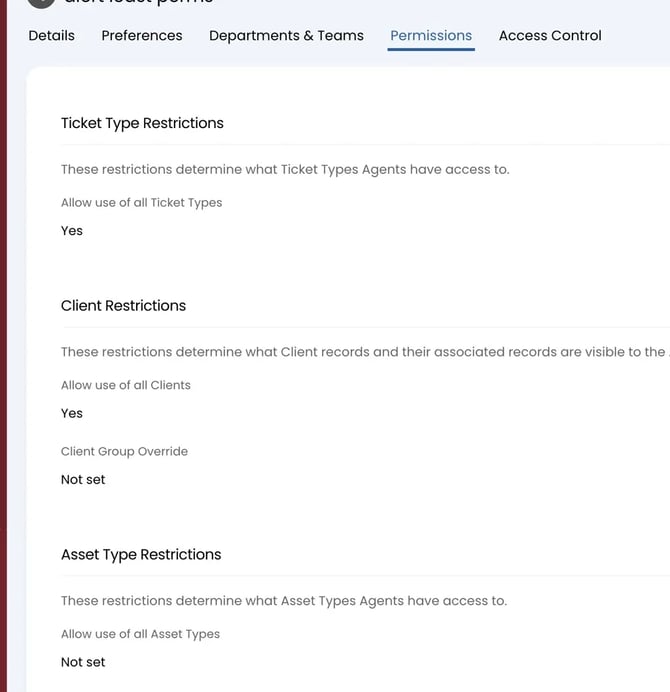
Navigate down to Ticket Type Restrictions:
-
Allow the user of all Ticket Types - yes
Navigate to Client Restrictions:
-
Allow use of all Clients - yes
Save this role, then proceed to creating a new Agent.
Configurate Agent
Navigate back to the Configurations page. Now go to Teams & Agents > Agents.
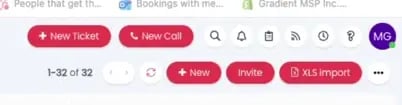
On this page, we will create a new Agent. Press the New button in the top right.
Use the following settings for the Agent:
-
Username will be 'MSPCentric'
-
Select MSPCentric under Roles
-
Select the API-only agent option
-
Default Team can be 'No Default Team'
-
Work hours will be 'Default Working Hours'
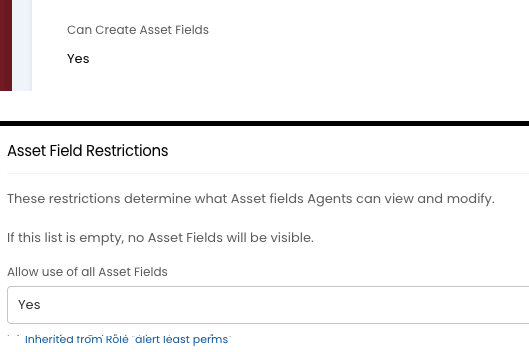
On the permissions tab, make sure that Can Create Asset Fields is set to Yes. Additionally, in the Asset Field Restrictions section make sure that Allow use of all Asset Fields is set to Yes.
Scroll to the bottom and hit save.
Create New Application
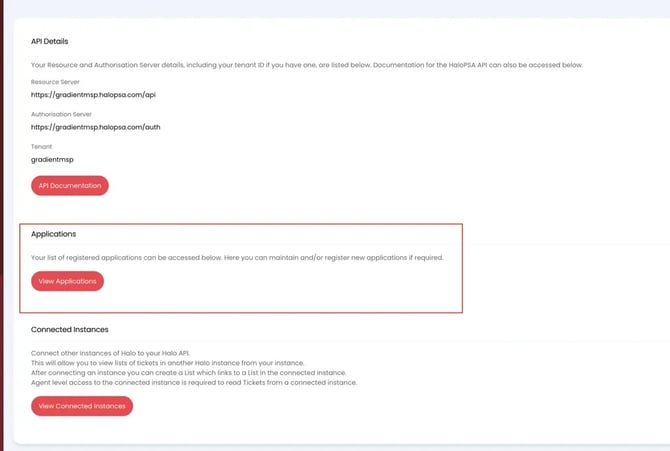
Navigate to Configuration > Integrations > HaloPSA API > View Applications.
Click New in the top right.
On the Details tab, enter "Application Name" with MSPCentric.
Set the "Authentication Method" to Client ID and Secret (Services).
Copy the Client ID and Client Secret into Gradient.
Set the Login Type to Agent.
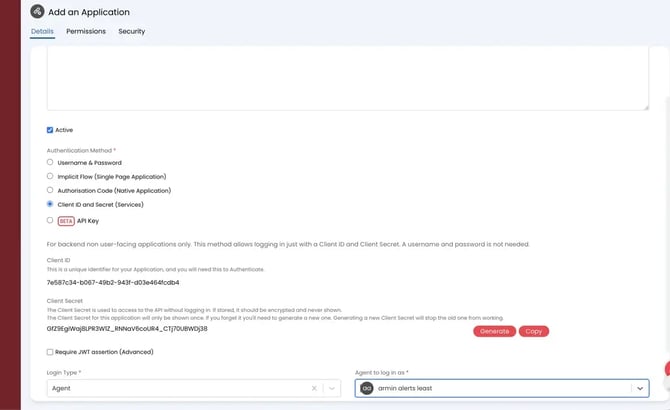
Select an Agent to log in as. This will be "Gradient" as we created the Agent in the earlier step.
Press Save. Press OK if you get a permissions pop-up.
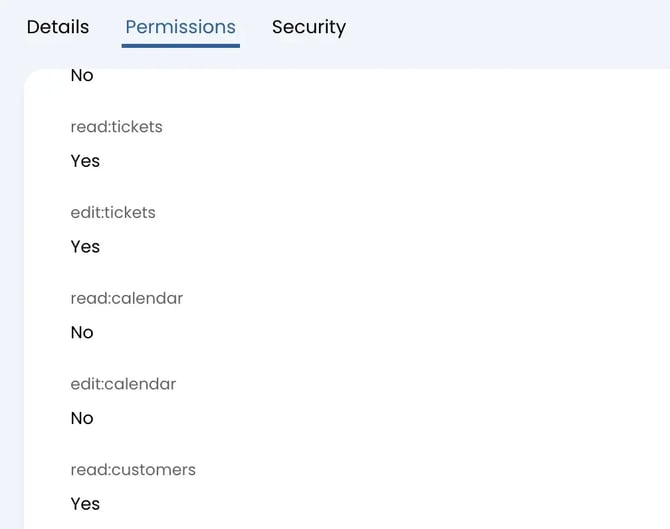
On the Permissions tab, enable the following permissions:
-
read:customers
-
read:contracts
-
edit:contracts
-
read:items
-
edit:items
-
read:invoices
-
edit:invoices
-
read:tickets
-
edit:tickets
Click Save.
Ensure that you save your clientId and clientSecret, and store securely.
Warning: Authorization Server requires a forward slash "/" at the end of the URL https://domain.halopsa.com/auth/
Congratulations, you've successfully connected your PSA!
Alert Specific Permissions
This section will contain Alerts specific permission
Role
In Roles > Permissions >
-
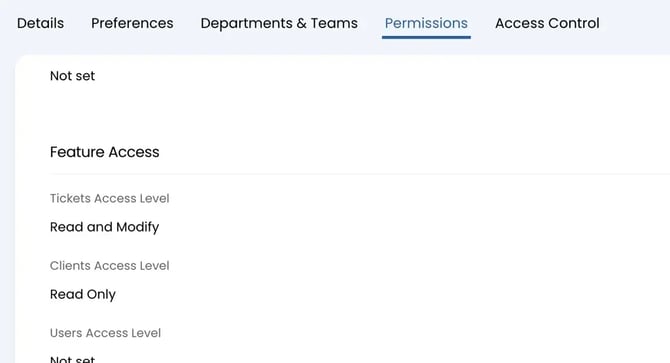
Feature Access:
-
Ticket Access Level: ‘Read and Modify’
-
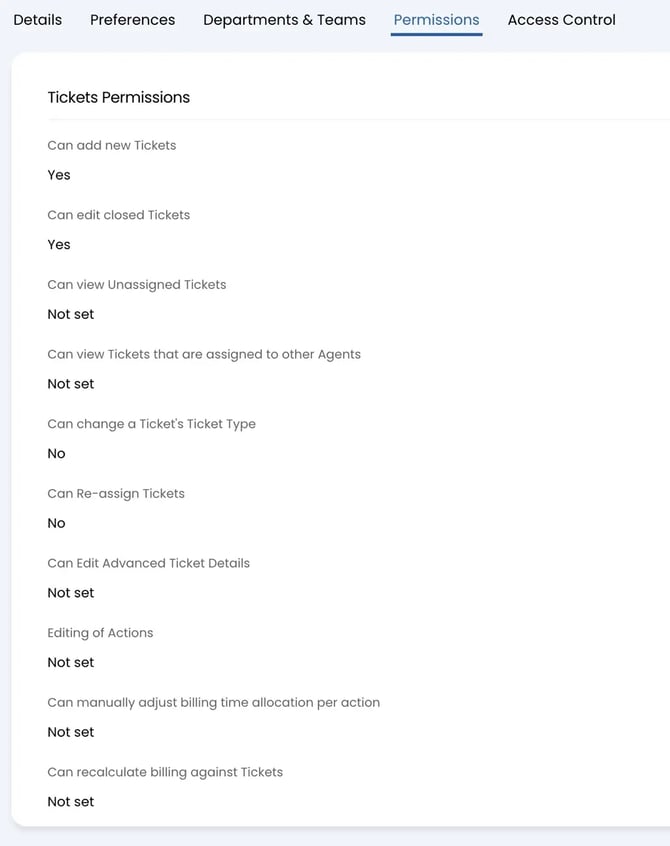
- Ticket Permissions:
- Can add new tickets: ‘yes’
- Can edit closed tickets: ‘yes’
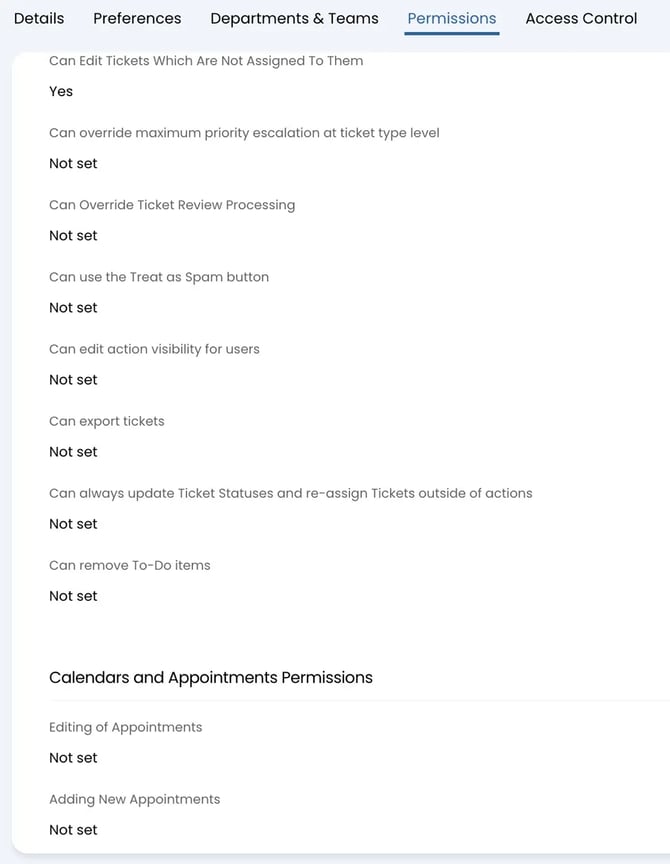
- Can edit tickets which are not assigned to them: ‘yes’
- Can view tickets that are assigned to other Agents: ‘yes’
- Can edit Advanced Ticket Details: ‘yes’
- Can edit tickets which are not assigned to them: ‘yes’
-
Ticket Type Restrictions:
-
Allow use of all Ticket Types: ‘yes’
-
-
Client Restrictions:
-
Allow the user of all Clients: ‘yes’
-
Agent
The Agent that you are using for the integration MUST be assigned to have visibility of the Team or Teams that they are looking to select in the SonicWall app for Alerts. This can be done by manually selecting a Team or Teams to add on Department & Teams tab of that Agents profile(Configuration > Teams & Agents > Agents).
The easiest way to ensure this is to go to Configuration >Integrations > HaloPSA Api > Application, select the Application that you are using, and set All:Teams to Yes.
.png?width=670&height=289&name=image%20(35).png)
Application
When configuring the application permissions, the alerts-specific permissions required are:
-
read:tickets
-
edit:tickets
-
read:customers